
Styling
How to choose the right vase for your bouquet: 6 rules that work
· 5 min read
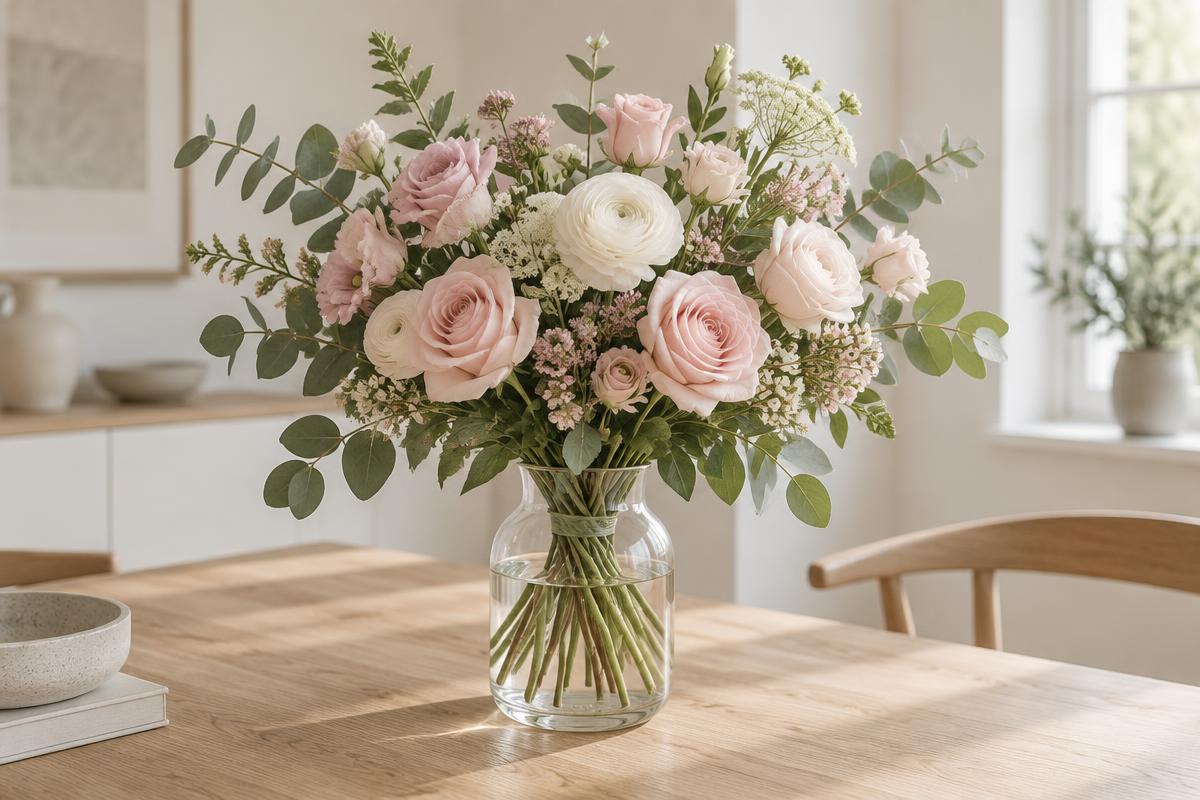
You bought a gorgeous bouquet, but at home it falls flat. Often the problem is not the flowers but the vase. The right vase supports the stems, shows off the blooms and makes the bouquet look greater than the sum of its parts.
Rule 1: the vase should cover at least a third of the stem length
A vase that is too low makes a bouquet unstable; a vase that is too tall hides the flowers. Rule of thumb: the vase should take up about one third of the total arrangement height. For 45 cm tulips, a 15 cm vase is a good fit.
For a loose, garden-picked bunch choose a vase that holds the lower half of the stems, letting the top half move freely.
Rule 2: match the shape to the bouquet
Tulips and daffodils look best in a round, flared vase that lets the stems spread. Roses and ranunculus suit a cylinder or a vase with a narrower neck that keeps stems together.
A single statement flower such as a peony or amaryllis is shown off best in a slim vase or bottle. A cascading, wild bouquet needs a wide bowl shape instead.
Rule 3: glass, ceramic or metal?
Glass is practical: you can see the water level and any clouding at a glance. Clear glass works most beautifully with long, straight stems.
Ceramic and earthenware add warmth and suit rustic or seasonal bouquets. Because you cannot see the water, change it regularly. Metal can react with flower food; only use it with an inner glass liner.
Rule 4: consider the space
On a narrow windowsill or side table a slim vase works better than a wide bowl. A large dining table calls for a substantial piece that looks good from every angle, such as a low tray with several small vases.
For a sideboard or hallway a taller vase draws the eye upward. Keep the centre of gravity low, though: a wide base prevents tipping.
Rule 5: clean water matters more than the vase itself
An expensive vase will not save a bouquet if the water is dirty. Rinse the vase with warm water and a drop of washing-up liquid, remove any leaf debris and change the water every two days.
Never use a vase that still holds residue from a previous bouquet: bacteria are the single biggest cause of early drooping. A clean, simple vase always beats a beautiful dirty one.
Rule 6: creative alternatives
No suitable vase at home? A large carafe, empty bottle, mason jar or pretty mug can do the job. Wrap a kraft-paper sleeve around a water bottle for a temporary minimalist look.
Want a tall bouquet in a low vase? Cut the stems shorter and use a flower frog or chicken wire across the opening to keep them in place.
In short
Pick a vase that covers about a third of the stems, match its shape to the bouquet, and above all keep it scrupulously clean. Then your flowers can do what they do best.
Read next
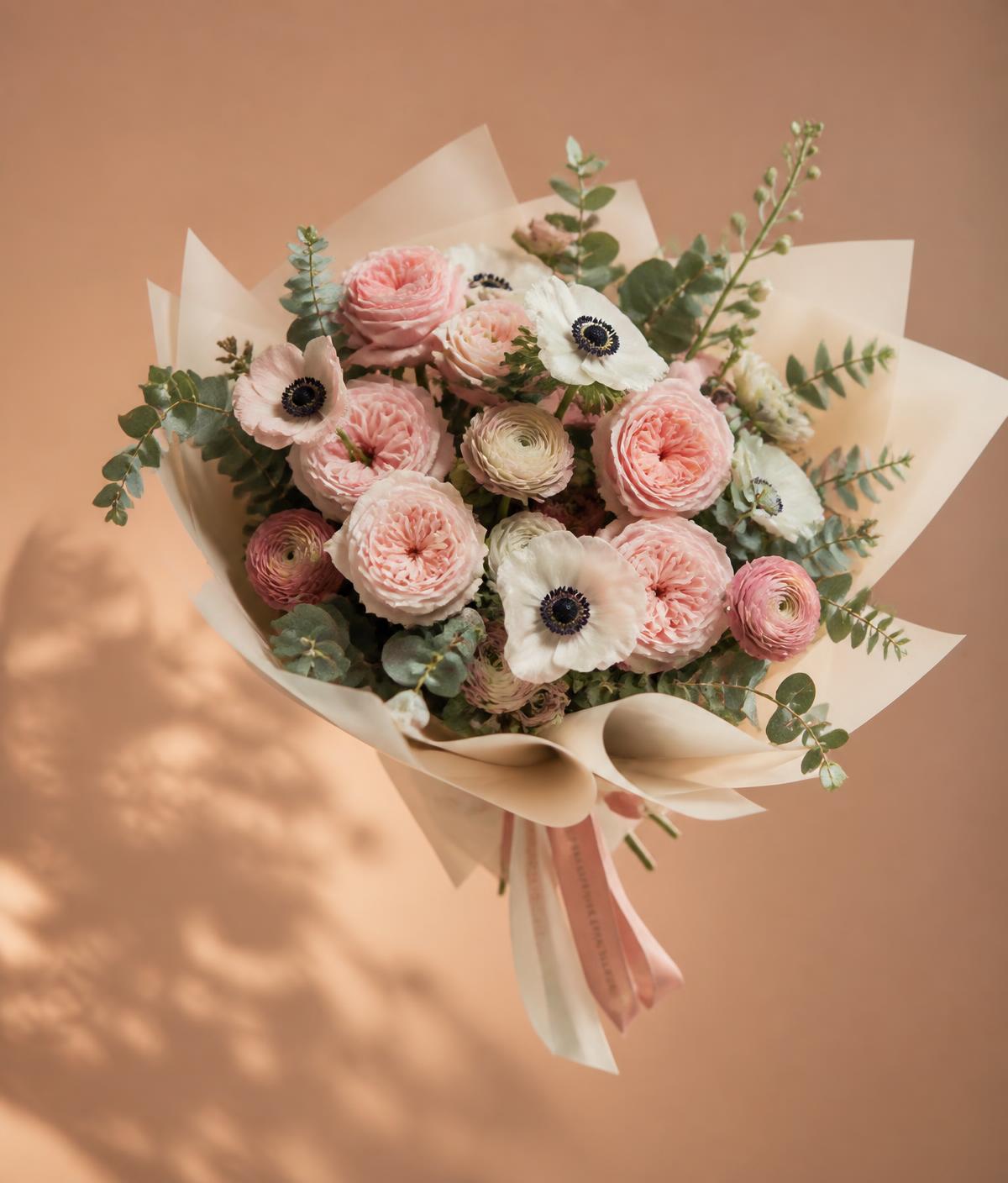 Buying adviceFlower delivery in Rotterdam: your ordering checklistWhat does your florist need to know? Prepare the address, budget, card message and preferred delivery date before ordering.4 min read
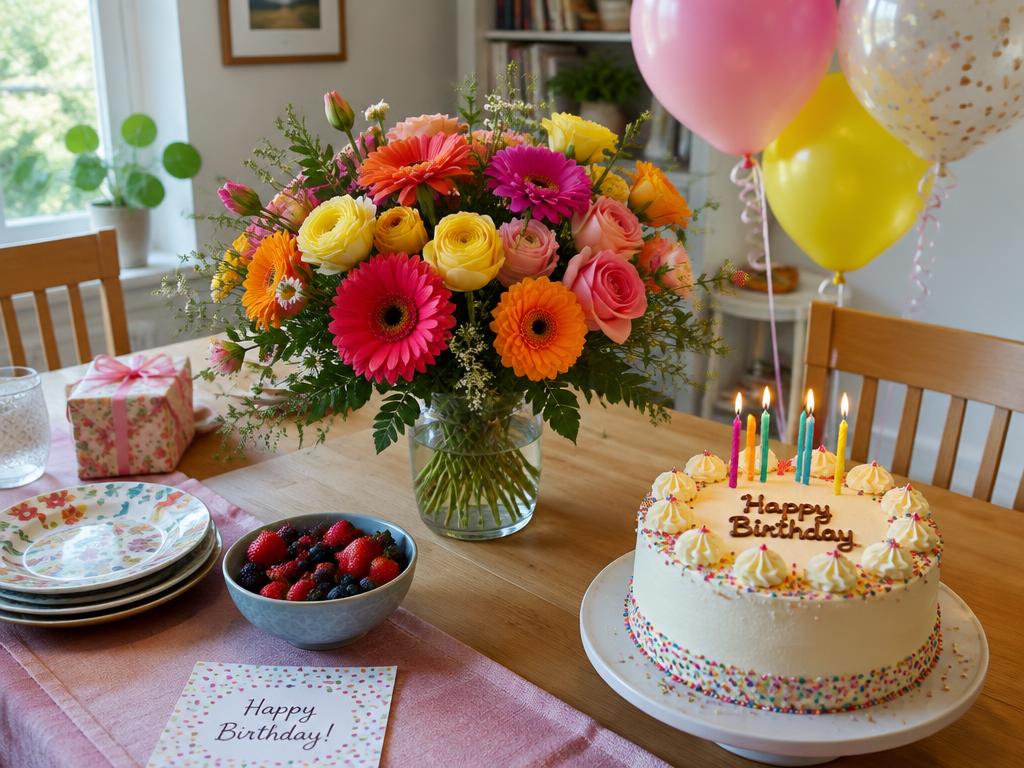 Buying adviceBirthday flowers: choosing a personal bouquet within your budgetA thoughtful birthday gift starts with the recipient. Discuss colour, size, budget and delivery with your florist.4 min read
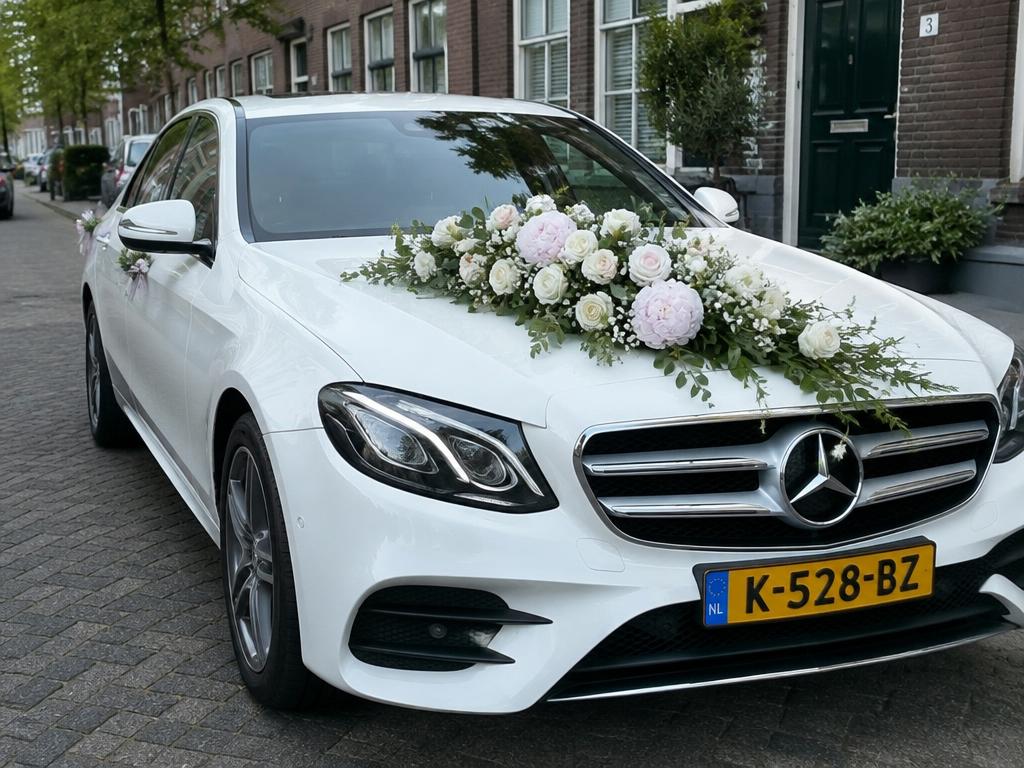 Buying adviceBridal bouquet and wedding-car flowers: coordinating your plansBring the bouquet, car flowers and reception decorations together. A checklist for colours, attachment, locations and your request.4 min read